
Your first visit to a Buddhist temple can leave you pausing outside the main hall. Which door should you use? Where should you stand once you’re inside? How many times should you bow? No one’s there to tell you.
Temple etiquette is actually easy to pick up once you know a few basics. Enter through a side door, join your palms, bow, then perform three prostrations on a cushion. Once you understand what each gesture means, your body will remember.
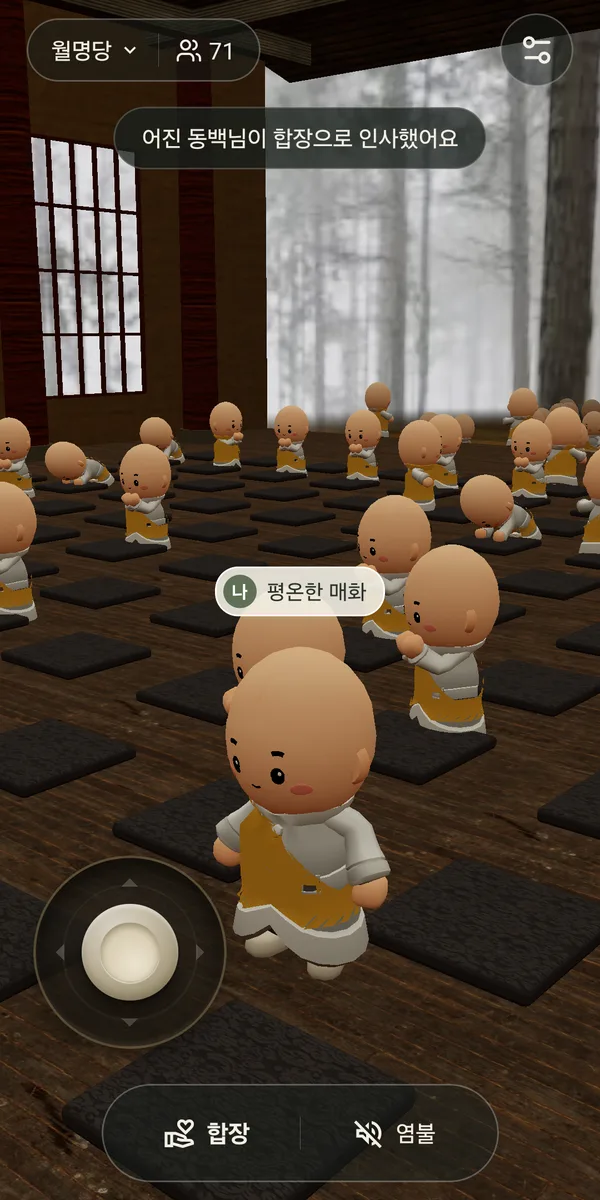
TempleDay is an app with a 3D Buddhist temple hall set in a mountain forest. You can join your palms and make prostrations there. Other visitors in the same hall appear on screen, too, so you can feel the atmosphere of being there with others.


Temple Hall Etiquette to Know Before Your First Visit
Temple etiquette is a way of expressing respect for the Buddha and for those who practice there through your actions. Rather than memorizing a sequence, understanding why each gesture is made helps you follow along naturally.
Use a Side Door, Not the Center Door
The door in the very center of the temple hall’s front is called the eoganmun. Since it leads straight toward the Buddha, visitors enter and leave through the doors on either side instead. Take off your shoes and place them neatly so they’re easy to put back on when you leave.
Inside the hall, keep the center space directly in front of the Buddha statue—the eogan—clear as well. If you need to cross in front of it, join your palms, bow slightly, and pass quietly.
Joining Your Palms and the Half Bow Are Basic Temple Greetings
To join your palms, bring both hands together neatly in front of your chest. The gesture expresses respect and brings your scattered thoughts together. Bowing from the waist with your palms joined is called a half bow.
The half bow is the greeting you’ll use most often at a temple. When entering or leaving the hall, before and after a full prostration, or when you meet a monk or another visitor on the temple grounds, join your palms and bow your head and waist instead of speaking.
Make Three Prostrations on a Cushion, Touching Five Points to the Floor
When you enter the hall, you make three full prostrations to the Buddha. This is called a three-prostration bow, and it expresses taking refuge in the Three Jewels: the Buddha, his teachings, and the monks who follow them.
A full prostration, known as the five-point prostration, brings both knees, both elbows, and your forehead to the floor. It means lowering yourself fully and letting go of pride. While bowed, turn your palms upward and raise them beside your ears to symbolize supporting the Buddha’s feet.
Before rising from your third prostration, add a final gesture called a koduryebae. While still bowed, lift your head briefly with your palms joined, then touch your forehead to the floor again. It’s also called a yuwonbanbae. Once you’ve finished, rise and end with a half bow.
The Sounds of a Temple Each Have Their Own Meaning
At the time of the daily Buddhist service, temples sound four instruments in sequence: a large bell, a Dharma drum, a wooden fish, and a cloud-shaped gong. Together, these are called the four instruments, and each sound reaches a different place. The bell is said to reach beings in hell beneath the earth; the Dharma drum, animals on the earth; the wooden fish, creatures in the water; and the cloud-shaped gong, beings flying in the sky.
A moktak is a small wooden fish that fits in your hand. Since fish are thought to sleep with their eyes open, it reminds practitioners to stay awake and attentive. The wind chime hanging from the temple hall’s eaves also has a fish attached, offering the same teaching whenever the wind blows.
The Painting Behind the Buddha Is a Buddhist Altar Painting
The large painting on the wall behind the Buddha statue is called a hubul taenghwa, or rear altar painting. It often depicts the Buddha enshrined in the hall preaching, surrounded by bodhisattvas, disciples, and guardian deities. The statue and painting together complete the hall’s place of worship.
| Gesture or sound | When | Meaning |
|---|---|---|
| Join your palms | When greeting someone or praying | Brings scattered thoughts together and shows respect |
| Half bow | When entering or leaving the hall, or meeting someone on the temple grounds | A basic greeting made with palms joined and a bow from the waist |
| Three prostrations | When paying respects to the Buddha in the hall | Take refuge in the Three Jewels through the five-point prostration and humble yourself |
| Koduryebae | Before rising from the final prostration | Express your reverence once more |
| Temple bell | Morning and evening services | Its sound reaches and relieves even beings in hell |
| Wooden fish and moktak | During services and chanting | For beings in the water, and as a reminder to stay awake in your practice |
| Wind chime | When the wind blows | Its clear sound awakens the mind to practice |
You can make all the gestures in the table without saying a word. If you feel awkward speaking to someone at a temple you’re visiting for the first time, a half bow with your palms joined is a perfectly good greeting.
What You Can Do in TempleDay’s Hall
Climb the Stone Steps from the Courtyard to the Hall
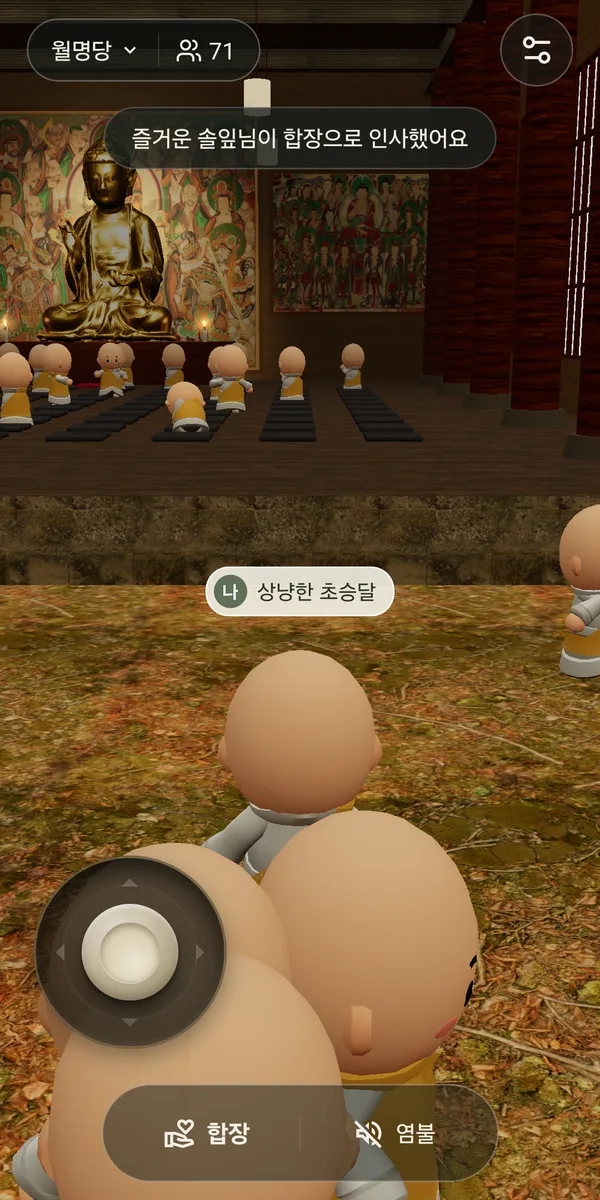
When you open the app, you’ll start in a mountain temple courtyard covered in fallen leaves. Tap where you want to go and your character will walk there, or use the joystick in the lower-left corner to move around. The temple bell rings once as you enter, while the sound of a moktak, birds, and a stream can be heard in the distance.
Climb the stone steps and enter the hall to see the Buddha statue, the painting behind it, and lanterns. Drag the screen to look around inside, with a misty pine forest visible through the windows.
Join Your Palms While Standing, Then Sit on a Cushion to Make Prostrations
To greet the people in the hall, stand and tap the button for joining your palms. Everyone else in the hall will see a notification at the top of their screen: "○○ greeted everyone with palms together." Like the half bow described above, it’s a greeting you can offer without saying a word.
Walk to a cushion and your character will sit down, bringing up a button to make prostrations. Tap it and you’ll continue bowing slowly until you stop; a singing bowl rings with each bow. You can also see visitors on the cushions beside you making their prostrations.
Choose a Hall That Isn’t Too Busy
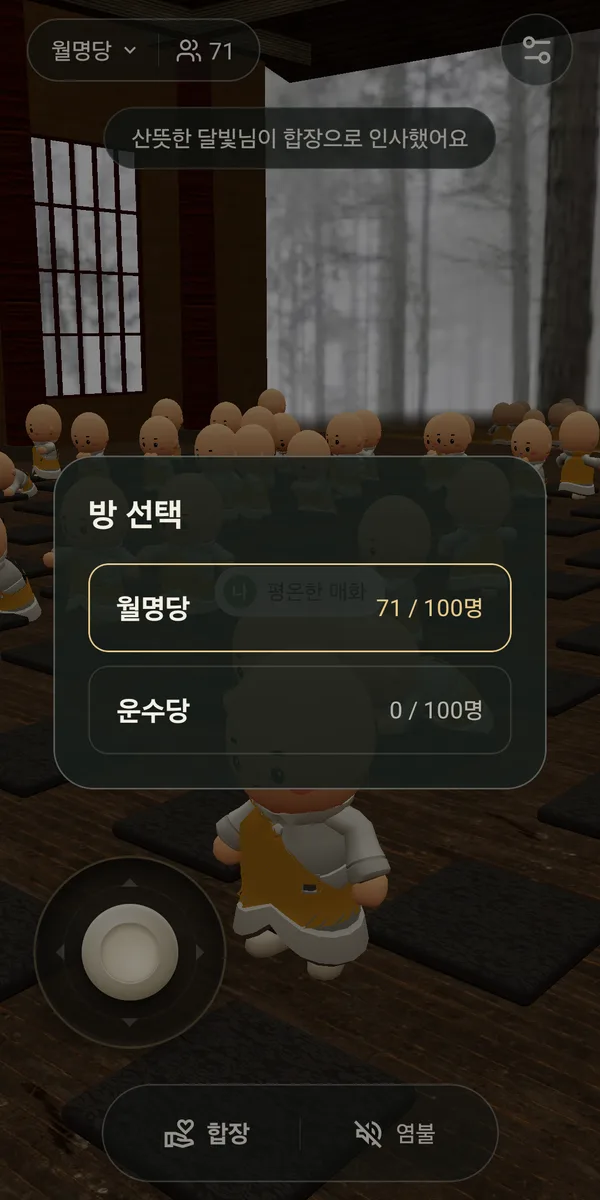
Each hall has a set capacity, so it never gets too crowded. Tap the hall name in the upper-left corner to see the list of halls and how many people are in each one. Choose a different hall and you’ll enter from its courtyard.
When you enter, you’re automatically given a nature-inspired name, such as "Quiet Mountain Bird" or "Leisurely Pine Needle." There’s no need to sign up or choose a name. Tap another visitor to see their name.
Adjust the Mountain Temple Sounds to Suit You
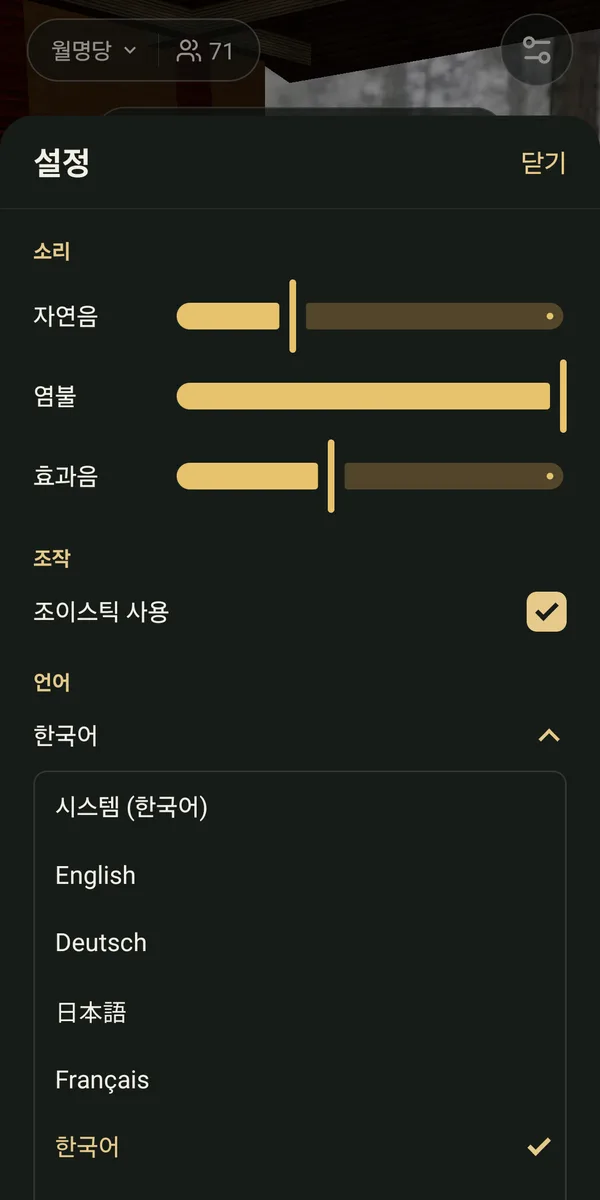
In the settings at the top right, you can adjust the volume of nature sounds, chanting, and effects separately. Turn up the birds and stream while you relax, or raise the chanting and immerse yourself in the atmosphere of the hall.
What We Paid Special Attention to While Making TempleDay
The Buddha statue in the hall was created using 3D data of a Goryeo-era gilt-bronze seated Buddha made available by the National Museum of Korea. The rear altar painting behind the statue is a Joseon-era painting held by the Samcheok City Museum, and the Amitabha paintings on either side are also from the collection of the National Museum of Korea. These cultural heritage resources are all openly available for anyone to use with attribution.
The sounds also come from real temples. The bell that rings as you enter the hall was recorded at Manbongsa Temple, and the chanting in the hall was recorded at Gakwonsa Temple. Only the singing bowl that sounds during prostrations was synthesized rather than recorded.
We deliberately left out chat. Just as you might greet someone you’re meeting for the first time at a real temple with joined palms and a half bow, we wanted people using the app to sense one another’s presence through greetings and prostrations alone.
Who We Recommend It For
- Anyone preparing for a temple stay or temple visit who wants to practice temple etiquette ahead of time
- Anyone who wants to sit somewhere quiet and rest their mind, even for a few minutes during a busy day
- Anyone who finds meditating alone lonely and would like to share a quiet moment with someone
- Anyone who wants to relax with the sound of a temple bell, chanting, and nature in the mountains
Frequently Asked Questions
Does it work without an internet connection?
No. Since you share the hall with other visitors, you need to be connected to the internet.
Do I need to sign up?
No. When you open the app, you’ll start right away in the mountain temple courtyard, and a name will be assigned to you automatically.
Can I talk to other visitors?
No, there’s no chat. But if you greet everyone with joined palms, they’ll receive a notification, and you can see one another making prostrations.
Is it okay if I’m not Buddhist?
Of course. It’s a place to relax amid the atmosphere and sounds of a temple, and anyone is welcome to drop in. If you’ve been curious about temple etiquette, it can also be a chance to practice first.
Can I enter the same hall as a friend?
Yes. Choose a hall from the upper-left corner, then select the same hall name to enter together.